09 December 2012

Lock time

After 6 days of fun & sun, we finally sailed into Limon Bay.  The day started early as we eased past the breakwaters and began our journey into the Panama Canal.   My brother noted that, after a few days on board of one of these cruise ships, you can tell when something is different - the ship is slowing down, turning, stopping.  Seemed like everyone was up at 0600 as we slowed to enter the bay a few miles north of the Gatun Locks - the official entry point for the Panama Canal.  To help celebrate the event, the the opened up bow section on Deck 4 for everyone to get a first hand look as we passed through the locks (ala Kate and Leo style).  They even hauled out coffee and pastries and mimosas for the adventurers who braved the deck and the rain squalls to witness the passage of this massive vessel through some very small looking locks.   


Before we begin our 48 mile journey from one ocean to another, I thought I would go over a few details for you technophiles  (tip of the hat to my brother for noting this intel): 

  • The MS Zuiderdam is 955' long, 105' wide, 26' deep.  
  • Each chamber in the three Gatun Locks is 1000' (305 m) long, 110' (33 m) wide, 70' (21 m) deep. 
  • The locks on each end of the canal will raise ships 85' (25.9 m) to the level of Gatun Lake.  The Gatun locks (Atlantic side) accomplish this with a series of 3 locks each raising a ship by roughly 27' (8 m).  The Pedro Miguel and Miraflores locks (Pacific side) do this in combination of two lock systems.  Pedro Miguel is made up of two lock chambers and Miraflores is one single lock chamber.  
  • Each transiting vessel uses 52 million gallons of fresh water and takes anywhere from 8-12 hours to go from the Caribbean to the Pacific. 
  • Total cost for our little boat to transit the canal?  $408,000. (that's some kind of surprise to find on your credit card bill).  And that includes a $30,000 "lock time" fee to have a specific time to enter the locks (sort of like paying for a reservation to get a reservation at some swanky restaurant).  If you don't pay the lock time fee, you have to park your ship in Limon Bay and wait your turn in the queue.  


Took us under an hour to navigate the locks and parked in Gatun Lake.  For those who wanted to explore the rest of the canal or take a ride on the Panama Canal rail road or kayak a portion of the canal, we could get off here.  The rest would stay on board and cruise the lake before heading back out through the Gatun Locks to dock in Colon.  Us adventurous souls we were herded into 'tender' boats and shuttled to a waiting bus that whisked us to Gamboa and a ferry that took us across Gatun Lake, through the infamous Culebra Cut (the site of many slides and deaths) and then down the three locks on the Pacific side to Panama City.  Took about 3 hours to navigate to the Pacific and was fascinating to see the locks from an up close perspective.  As an Engineer, I was totally mesmerized (drooling, some say) at the pure engineering skill and effort that wend into the entire effort.  My little hamster wheel was trying to grok the sheer magnitude of the Engineering, the construction, the logistics, the costs of the entire operation.   Impressive especially considering it was completed almost 100 years ago.  


Brother & Dad

3 stooges


05 December 2012

Life aboard the Zuiderdam


Before we move on to the highlight of our tour, Teddy's big ditch, I thought I would talk about life aboard the MS Zuiderdam.  10 days on a boat, in close proximity to family can make one a wee bit crazy.    

We did a number of activities on the boat, but this trek I planned to enjoy the ride and tried not to stress out over “doing it all”.  There were several days I parked my assets in the lounge chair on the back deck catching some rays and cruising through my latest Michael Crichton novel.  We did attend several shows - the comedy and magic acts were good, the dancers were amazing, they even had a steel drum group that rocked the lounge.  There were a number of classes on various stuff, but most of the time we enjoyed the slower pace.  We did get in a few rounds of Mexican train, but, our group got  typically loud and boisterous.        

The boat did have internet access, but, like everything else on the boat, you pay for it.  You basically buy a package deal for a certain number of minutes of usage/access.  Normally, I would not be all that interested in being “dialed in”, but because my in-laws are having health issues, I decided we needed to maintain some lines of communication with the real world while we were out plying the oceans.  I bought 250 minutes for ~$100 (plus an embarkation special - they throw in an extra 20 minutes if you sign up before the ship embarks).      They had an internet lounge/coffee bar/library at the top of the ship (called the Crow’s Nest) – a very nice, quiet room with lots of seats and a 180 degree panoramic view of the ocean.  You could either use the ship’s computers or use your own tablet, laptop or mobile device to hook up to the net.  You just remember that you have to pay for that privilege.  I wound up using momma’s iPad a lot to check e-mails, relay messages to my son, keep up with the world.  I even burned through a lot of the minutes when my team wound up playing the number one team in the nation and the ship did not carry the game on the TV system (they had ESPN, but not CBS).  Was interesting to monitor a football game real time while sitting on a boat out in the middle of the Caribbean.  The connection was from a satellite feed, and very, very slow (worse than dial up).  They did have a WiFi signal throughout the ship and I could even access the net from our stateroom.  It cost me to have that ability, but it was nice to keep in touch with home.  I did try to keep up with everyone’s blog postings but trying to post a response was way too slow.  The one trip I found was to use my iPhone for updates.  I would turn on the WiFi at one time during the day and download all the updates and then turn it off and read the messages/updates.  Saved me some time and didn't burn up all of my minutes.  I even stole some free WiFi in Aruba from a local restaurant.  Improvise, Adapt and Overcome!


Living on the boat for 10 days you will pick up some habits.  All that food and liquor tends to have an effect on everyone.  Three square meals per day will add up.  We ate pretty darned good every day.  Breakfast was like eating at Denny's only without the wait and kids.  Every morning I had something different (Eggs Benedict  bacon, omelets, fruit, sausage, poached eggs, scrambled eggs, bacon, fried eggs, yogurt, hash browns, bacon).  After eating like that, a lot of people will go home with a few more pounds of souvenirs if you don’t stay mobile.  These cruise lines typically have a 1st class exercise/workout room with the latest equipment.  Something about running a treadmill with a panoramic view of the ocean made it interesting.  But I don’t really like treadmills – I prefer to run outside, rain or shine.  Last cruise, I ran the track on the upper deck.  A 1/8 mile track that ran around the top of the ship near the basketball court and golf driving range.  While I really am not fond of running track as well, I still prefer it over a treadmill.  Still, doing 8-10 laps around the deck can get monotonous.  More than once I lost track of what lap I was one.  Armed with this Intel, I laid out a plan to run every day.  The first day out of port, I went up early to the top of the ship (deck 10) and ran around the upper railings.  The route was a bit circuitous, you had to navigate through two wind dams and some lounge areas to make the circuit.  I was disappointed that they did not have the route mapped out for distance and nobody else was up running that morning (slackers!).  I had to guesstimate the track length and I pegged it at roughly 1/8 mile.  Was pretty windy on deck (half the course had a headwind) but I knocked out 10 laps before I had enough.  I figured it was a start.  Went down the lido deck for breakfast and found my dad eating his morning regular.  I was going to chide him since he was not out walking (every morning without fail he walks 45 minutes) and he told me that he did his laps on the Promenade (3rd) deck.  I went down and, yea verily they did have a full circuit track laid out on the third deck below the lifeboats and it is mapped out for distance (1 lap = 1/3 mile).  Now that I knew the setup, I planned my days.  I was usually up at 0500 every morning and would hit the Promenade deck for some laps.  Started out with 3 miles (9 laps) and had worked my way up to 5 miles (15 laps) by the end of the cruise.  I am not going to be taking home any gold medals with my times, but I wanted to 1) burn off some of the calories from all the food and drink and 2) keep training for the upcoming ½ marathon (38 days).  It seemed to work as I left the boat in the same weight class as when I first went on board.  On top of all that, on one of our sea days, I noted that they were holding a 5k Walk called the On Deck for the Cure.  They hold it on every Holland  America cruise to raise money for the Susan G Komen Foundation.  I had done my laps that morning but I just had to participate so I got a few extra miles in on that day.  Made for good marathon practice running the deck while navigating through a crowd of walkers.   


04 December 2012

Same junk, different island


After a few days on a boat, the days tend to blur together.  Is it day 4 or 5?  Is it Monday or Tuesday?  What time zone are we in?  During our entire trek, I think we crossed three time zones. 

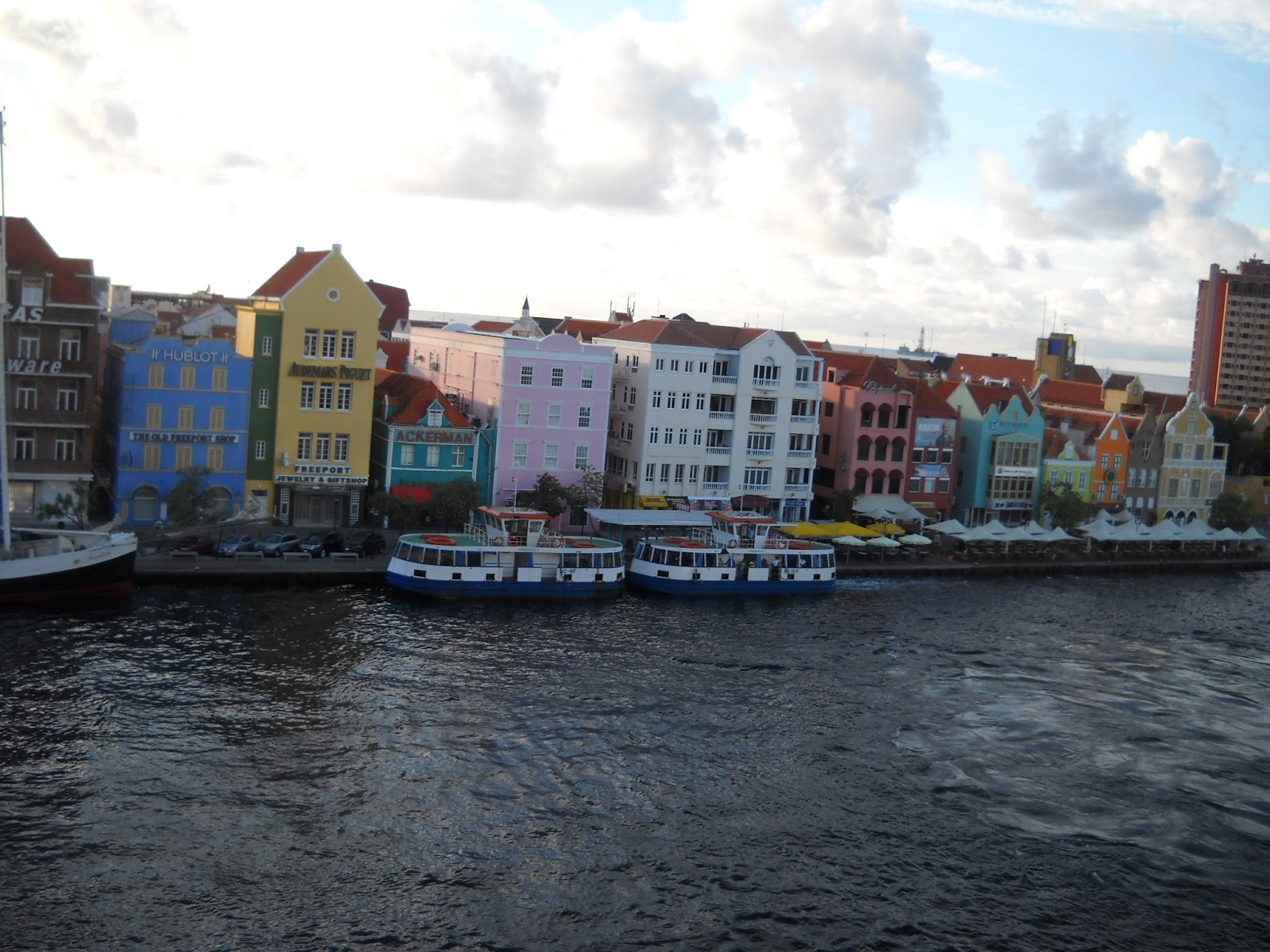
After Aruba, there was a short hop down the coast to another one of the ABC islands – Curaçao (pronounced Cura-ssow).  Another one of islands/countries that is part of the Kingdom of the Netherlands and gets a lot of its flavor of the Netherlands.  Buildings, shops, language, and even the beer is the same as you would find on the streets of Belgium.  We docked in Williamsport around 0700 in a narrow channel that is right across from downtown area.  The only way across the inlet channel is either the big 185 foot tall Queen Juliana bridge (no foot traffic) or the Queen Emma pontoon bridge or a water taxi.  The floating bridge is kinda interesting.  It is basically a permanent pontoon swing bridge with a motorized control booth that will drive the bridge out of the way of incoming traffic.  According to the literature on the island, they open that bridge up to 30 times a day. 
Williamsport
Queen Emma Bridge
  
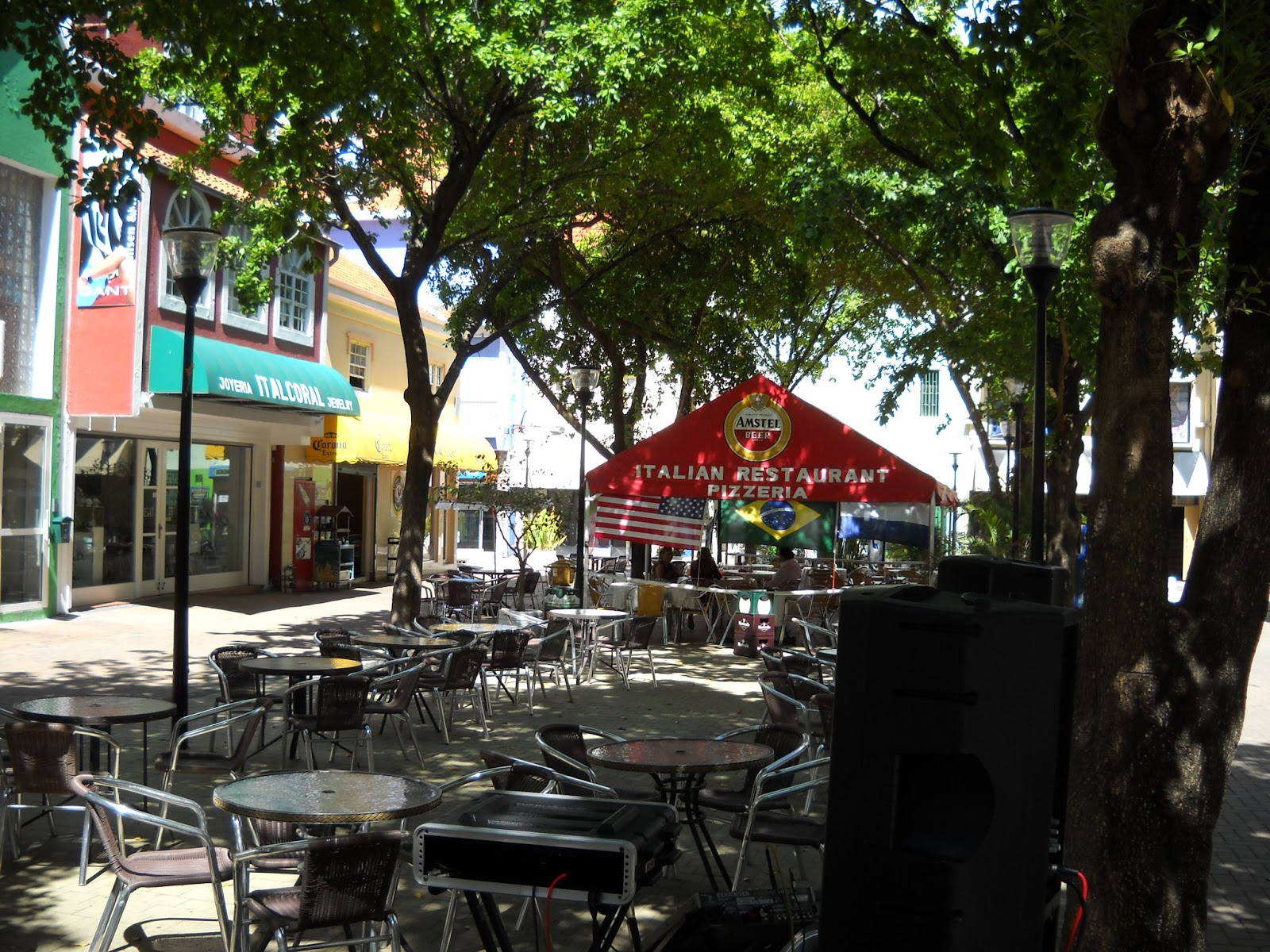
Curaçao is an interesting little island – lots of colorful homes/shops, oodles of places to buy stuff at a steep discount and tax free.  A lot of people will hit the town and buy up all sorts of fashions, jewelry from several of the big name stores.    We decided to take a hokey trolley tour of downtown to see the historic area.  Very nice town, colorful buildings, forts, lots of history.  After the tour, we wandered around town for a while checking out the shops, I found a local Italian place that served cold Lefe (Belgium) beer, I bought some cheesy refrigerator magnets, a few shirts, and a bottle of Curaçao – a very sweet blue orange liquor.  Was an interesting stop over.


Wedding cake house
The Governor's house - note the black dot halfway up on the left side of the house.
It is a genuine British cannon ball embedded in the side of the house.   
No idea


Belgium Beer

Our home
The parental units
Being a ME, I am always fascinated by mechanical stuff.  Engines, cars, planes, boats, big boats always have some allure for me.  The MS Zuiderdam is one big a%% boat.  At over XXX tons and XXX feet long, I was curious to see how they were going to put out to see from the dock.  We were nose in on a narrow channel and the Queen Juliana Bridge prevented us from going forward so I figured that they would use some tug boats to pull us away from shore and back us out to see.  Au contraire.  At 1600, our departure time, the Floating bridge opened up and we fired up the engines and put her in reverse.  Now this class of cruiser does not have the typical shaft and propeller system.  They have what is called Azipods.  Basically it is an azimuth thruster or giant steerable electric motor underneath the ship that will drive or pull the ship in whatever direction they want to go.  They can rotate turn the Azipod to have the ship back up and basically turn on a dime without any outside assistance.  Now, I have some minor experience in backing up big rigs.  I own a 30 foot trailer and can attest to the challenges in backing up a sizable trailer for some distance, but that pales in comparison to a 900+ foot, 12 story ship.  I sat amazement (while enjoying my evening scotch) and watched maneuver this behemoth away from the dock and then back it out into the ocean.    Once they were far enough off shore, they proceeded to turn the ship within its own foot print and then head off to our next port of call.  Color me impressed.  

Azipod